Why Amsterdam works for corporate events
Amsterdam has a set of structural advantages for corporate events that most European cities can't fully replicate:
- Compact, walkable centre: The Canal Ring fits inside a semicircle roughly 3 km across. Your hotel, conference venue, team building start point and dinner restaurant can all be within 10 minutes' walk of each other — eliminating the transport logistics that fragment event schedules in larger cities like London, Paris or Berlin.
- Transport connectivity: Schiphol is 15 minutes by direct train from Amsterdam Centraal, with direct connections covering most of Europe plus intercontinental routes to North America, Asia and the Middle East. For international corporate groups, this is one of Amsterdam's strongest practical advantages.
- English as a working language: Amsterdam is consistently ranked among Europe's most English-proficient cities. Virtually all service providers, venues and facilitators operate in English without issue — an important factor for multinational teams where Dutch fluency cannot be assumed.
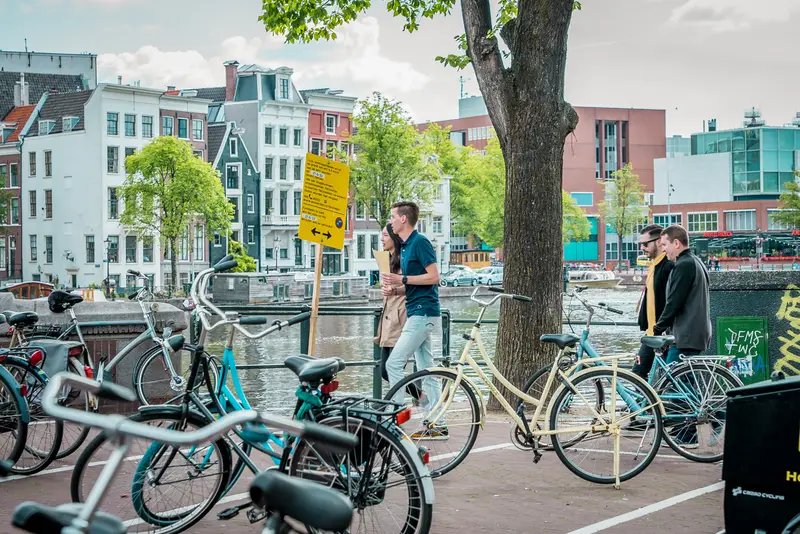
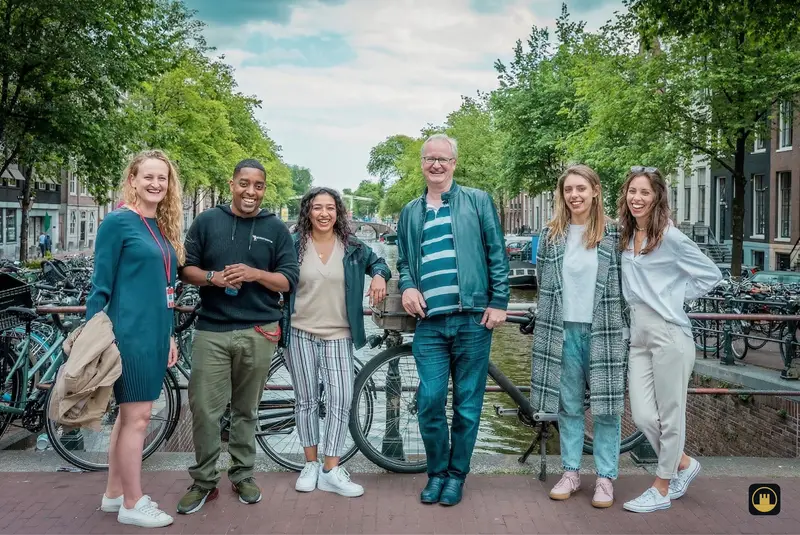
- Visual distinctiveness: The canal ring, gabled houses, narrow streets and cycling culture give every event a distinctive backdrop. A corporate event in Amsterdam looks unmistakably like Amsterdam, not like an anonymous hotel convention centre in any European city.
- Infrastructure density: Within a 2 km radius of the Canal Ring you have 4-star hotels, mid-sized conference venues, outdoor activity start points, and hundreds of restaurant options. The density means you can design a full-day programme without any coach transfers.
When to schedule your event
Amsterdam's seasonal patterns for corporate events — and what each period actually means in practice:
| Period | Conditions | Hotel rates | Lead time needed | Best for |
|---|---|---|---|---|
| Jan–Mar | Cold, short days (sunset ~17:30 Mar), low tourist density | Lowest | 3–4 weeks | Indoor-focused, budget-conscious events |
| Apr–May | Mild, longer days, tulip season, visually spectacular | Rising steeply | 6–8 weeks | Mixed indoor/outdoor — avoid King's Day (27 Apr) |
| Jun–Aug | Warm, long days (sunset ~22:00 Jun), peak tourist crowds | Maximum | 8–12 weeks | Outdoor-heavy events, international visitors |
| Sep–Oct | Comfortable temperatures, fewer tourists, good light | Moderate | 4–6 weeks | Best overall window — reliable weather, manageable crowds |
| Nov–Dec | Short days, canal illuminations, Christmas markets | Variable | 4–6 weeks | Festive events, end-of-year celebrations |
September is the month we most often recommend to clients who have flexibility. Fewer tourists means outdoor activity locations are less congested, hotel rates are 20–30% below peak, and the light in late September is exceptional for a canal city.
Programme structure that works
A well-structured Amsterdam corporate event day uses the city's layout to its advantage. The most effective structure:
- Morning (09:00–13:00): Conference session or workshop at venue. Amsterdam has a strong supply of mid-sized venues (50–200 people) in converted canal houses and industrial spaces — avoid generic hotel conference rooms if the budget allows.
- Early afternoon (13:00–14:30): Lunch at a canal-side restaurant or catered at the venue. Keep this to 90 minutes maximum — longer lunch breaks lose energy momentum.
- Afternoon (14:30–17:30): Outdoor team building activity. The outdoor break after a morning indoors is consistently rated as the highlight by participants — it resets energy levels and creates the shared experience that carries through the evening. A city Treasure Hunt works well here because it runs for 2.5–3 hours and ends with a score reveal that provides natural energy going into the evening.
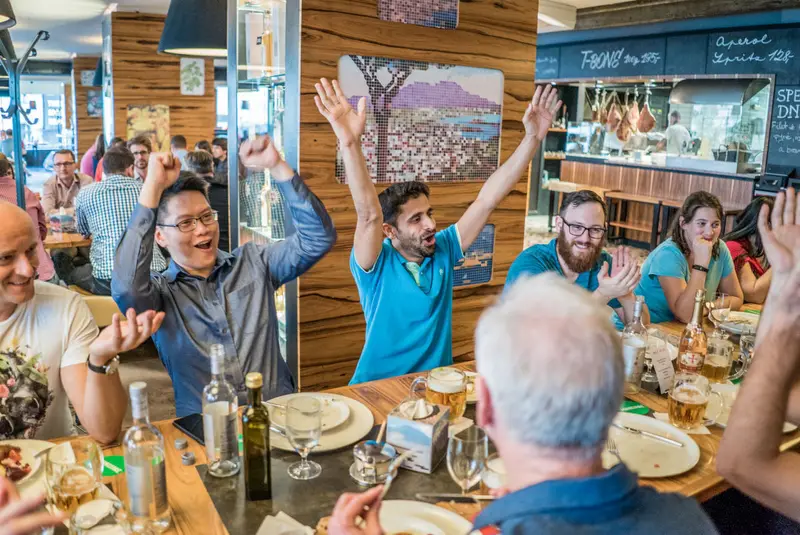
- Evening (18:30–21:30): Dinner at a restaurant in the Jordaan or Museum Quarter, or drinks at a brown café followed by dinner nearby. Book restaurants at least 3 weeks ahead for groups of 20+.
This structure — indoor session, outdoor activity, evening dinner — uses Amsterdam's strengths at each stage. The common mistake is scheduling back-to-back indoor sessions all day and treating the city as a backdrop rather than an ingredient.
Venue types to consider
Amsterdam offers more variety in event spaces than most European cities of comparable size. The main categories:
- Canal house venues: Historic 17th-century merchant houses with original beams and canal views. Capacity 20–120. High atmosphere, limited AV capability. Best for dinners, workshops and intimate sessions where the setting is part of the value.
- Industrial warehouse spaces: Repurposed warehouses in Noord (NDSM wharf) and Westergasfabriek. High capacity (200–500+), flexible configuration, good AV infrastructure. Best for large conferences, product launches and award ceremonies. Note: Noord requires a free ferry crossing from Centraal — build 15 minutes into transfer time.
- Museum event spaces: Several Amsterdam museums offer after-hours corporate event hire. The Rijksmuseum, Amsterdam Museum and Eye Film Institute are notable options. Premium cost but exceptional context — worth considering for client-facing events where the impression matters.
- Hotel event spaces: The Waldorf Astoria, Conservatorium Hotel and Pulitzer Amsterdam have good conference infrastructure with boutique character. Best for self-contained events where participants are also staying at the hotel and minimising external transfers is a priority.
Transport logistics in Amsterdam
Amsterdam's transport for corporate groups is genuinely straightforward compared to most major European cities — with a few specific things to know:
- Airport to city: Train from Schiphol to Centraal is 15–17 minutes, runs every 10 minutes, costs ~€5. This is the default for international arrivals. Book Intercity Direct tickets in advance for groups of 20+ to avoid platform confusion. Taxis from Schiphol take 25–45 minutes in traffic and cost €45–60; coaches are cost-effective for groups of 40+.
- Within the city: Amsterdam's central area is best navigated on foot or by tram. Car transport is slow (central speed limit 30 km/h, many streets closed to cars) and parking is expensive and scarce. For hotel-to-venue transfers, trams 1, 2 and 12 cover most central routes efficiently — buy group day tickets in advance.
- Coach drop-off: Central Amsterdam has limited coach access. Pre-arranged drop-off zones at Museumplein, Leidseplein or Centraal station are the most practical options. Confirm with your coach operator at least 2 weeks before — Amsterdam's coach parking rules change seasonally.
- Cycling: Amsterdam's cycling infrastructure is world-class and underused by corporate groups. For groups of up to 30, a guided cycling component can replace a coach transfer and double as an activity. Several companies offer guided corporate cycling tours.
The team building component
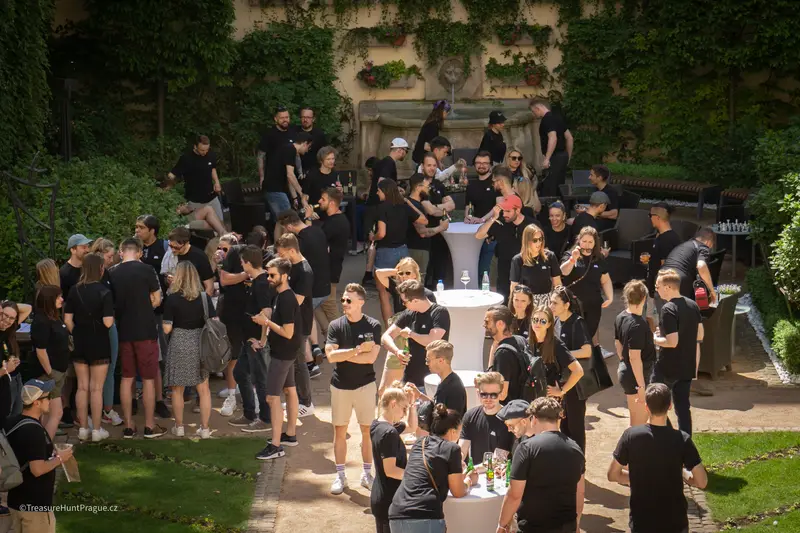
A well-chosen team building activity transforms a corporate event from a series of scheduled sessions into a shared experience that carries through the evening and beyond. In Amsterdam, the outdoor city format — a Treasure Hunt through the Canal Ring, Jordaan or Old Centre — consistently performs best because it uses the city's unique character as an active ingredient rather than a backdrop.
Position the activity in the afternoon slot between the conference morning and dinner evening. The energy arc — focused (morning), active (afternoon), social (evening) — is the natural rhythm of a successful corporate event day, and Amsterdam's walkable centre makes executing it seamless.
For groups with a specific cohesion objective (post-restructure, new hires, cross-department integration), the activity format matters more than for a pure celebration event. The planning guide covers how to match the activity to the objective before booking anything else.
Budget reference: typical Amsterdam corporate event costs
| Component | Budget range (per person) | Notes |
|---|---|---|
| Team building activity | €40–70 | Outdoor city hunt; lower per-person at scale |
| Lunch | €25–45 | Canal-side restaurant or catered venue |
| Dinner | €60–120 | Jordaan / Museum Quarter restaurant |
| Conference venue (half-day) | €30–80 | Canal house or mid-size space; hotel rooms higher |
| Hotel (4-star, per room/night) | €150–300 | Varies heavily by season; Sep–Oct best value |
| All-in event day (no accommodation) | €150–250 | Activity + lunch + dinner; typical for half-day programme |