The brief
The enquiry from Booking.com was refreshingly straightforward: "We are looking for a team building event for our team, where some people will be coming to Amsterdam for the first time. We thought it would be nice to have a treasure / city hunt for them for about 3 hours in the city."
26 participants, roughly 3 hours, the goal of showing colleagues Amsterdam properly for the first time. No agenda beyond that. The group included people who worked in the Amsterdam office regularly and people flying in specifically for the event — a common mix for a company with a distributed team.
The one logistical detail that shaped the whole structure: they wanted to start and finish at their own office. This made practical sense — no transport to a separate start point, no coordination overhead, and the office as a natural endpoint for the post-event score reveal and drinks.
The design decisions that mattered
With a clear brief and a compact group, we made three choices that were specific to this situation:
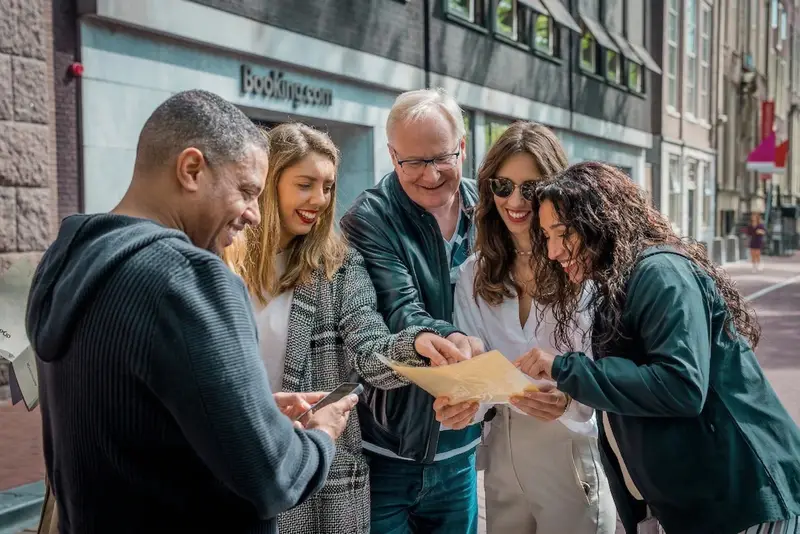
1. Route designed for first-timers. The Canal Ring route starting from the Booking.com office was built around the most visually striking and immediately legible parts of Amsterdam — gabled facades, bridge reflections, hidden courtyards, the Westerkerk tower as a navigational anchor. For participants who had never walked these streets, the route was designed to feel like a proper introduction to the city, not just a puzzle exercise. The treasure hunt format works well here because it creates a reason to stop, observe and engage with specific details that most people would walk past.
2. Company quiz woven into the route. At three points along the route, teams encountered Booking.com-specific questions — facts about the company's history, its Amsterdam roots and a few internal trivia items provided by the organiser. These weren't a corporate training exercise; they were framed as competitive quiz rounds with points that fed into the overall score. For colleagues who were new to the office, the questions gave context about the company's connection to Amsterdam. For people who'd worked there longer, it was a different kind of puzzle to solve.
3. Teams mixed to prevent existing groupings. With 26 people split into 5 teams of 4–5, we ensured that the people who already knew Amsterdam well were distributed across all teams rather than clustered together. This meant every team had at least one person who knew the city and at least two or three for whom it was genuinely new. The result: the navigation never fell entirely to one person, and the "first-timers" weren't left dependent on a single local guide.
What happened on the day
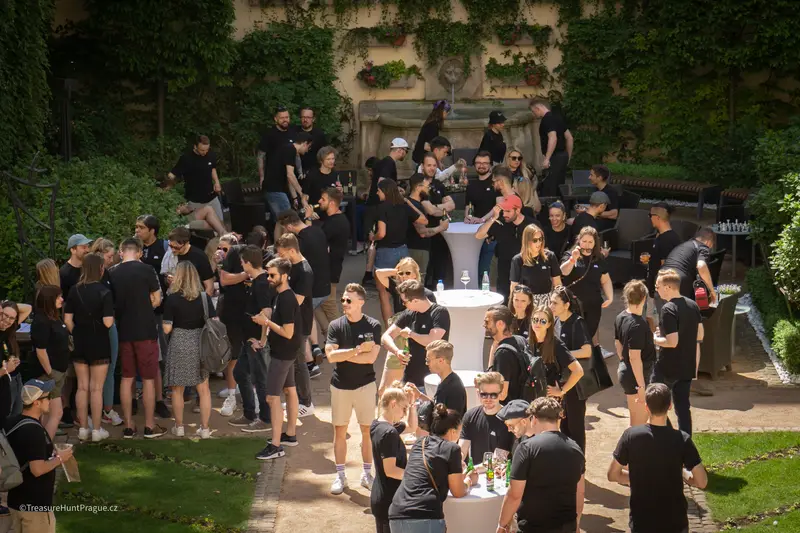
All 26 participants assembled at the Booking.com office for the briefing. Teams received their materials, the game master explained the scoring system (city hunt puzzles plus three company quiz rounds), and all four teams set off from the same starting point within five minutes of each other.
The route ran for approximately 3 hours through the Canal Ring. The weather was good — the kind of Amsterdam afternoon where the canal reflections are at their sharpest — and the teams spread naturally across the route without clustering. Groups were in regular contact via the game app, checking scores and sending the occasional photo of a clue location.
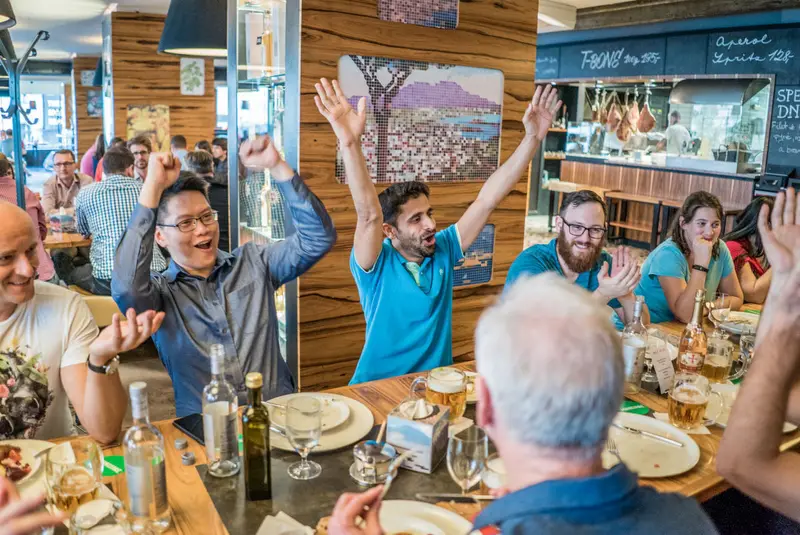
The company quiz rounds produced the best moments of the day. One question asked about the year Booking.com was founded and where. Two teams gave the same wrong answer with complete confidence. The correction at the debrief — and the competing explanations for how they'd both arrived at the wrong date — generated more discussion than the Amsterdam history puzzles did.
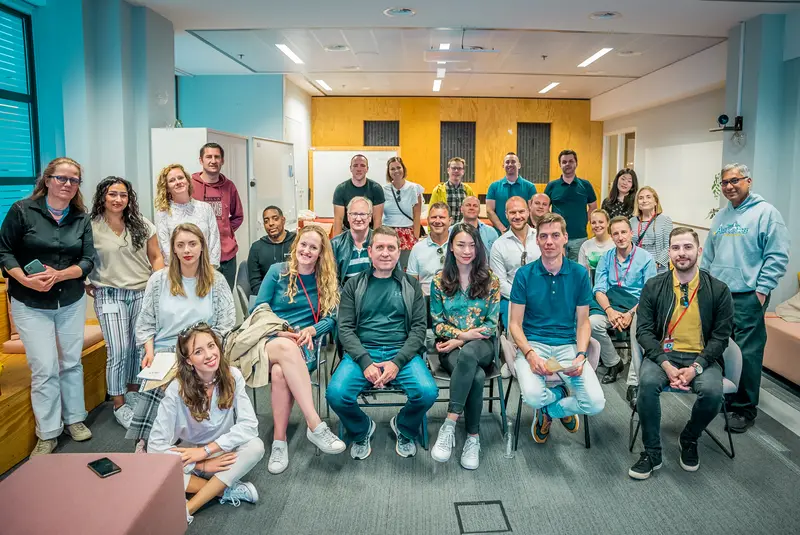
All four teams returned to the office within a 20-minute window. The score reveal happened in the office, with drinks already set up — a straightforward end to a straightforward brief.
Results
- All 26 participants completed the full route — no dropouts or early returns
- The post-event feedback was positive across the board; participants who were visiting Amsterdam for the first time specifically mentioned the route as a genuine introduction to the city rather than a tourist overview
- The company quiz element was highlighted as a favourite by multiple participants — the combination of competitive scoring and internal trivia worked well for a group that already knew each other professionally
- The organiser followed up to confirm the format worked and asked about options for a larger group event later in the year
What we'd adjust
One thing we'd do differently: the company quiz questions were provided by the organiser two days before the event, which left limited time to integrate them cleanly into the route narrative. A few of the questions felt slightly disconnected from the city hunt puzzles around them. With a week's lead time on the quiz content, we could have woven the Booking.com material into the Amsterdam context more naturally — for example, linking a question about the company's founding year to a canal house from the same period, or connecting a product question to a location relevant to the answer.
For anyone planning a similar event with a company quiz component: send the quiz content at least a week before. The integration is better, the transitions between city puzzles and company questions feel smoother, and the whole experience holds together as one narrative rather than two things running in parallel.
For guidance on planning the logistics of a team building event starting from your office, the step-by-step planning guide covers the practical decisions that matter.